
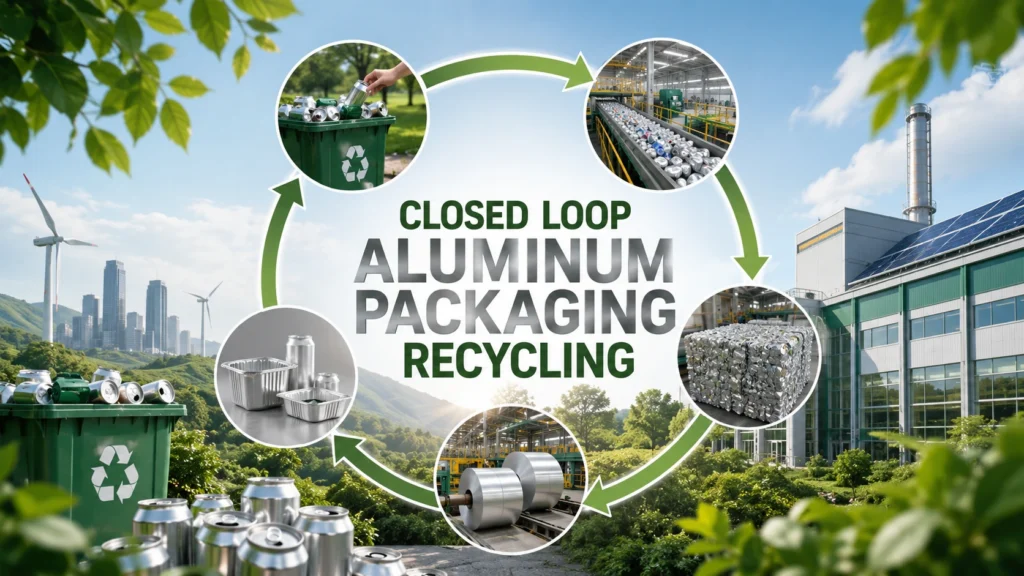
In today’s sustainability-driven marketplace, closed-loop recycling is transformingaluminium supply chains by reducing waste, cutting costs and advancing global climate goals. Unlike traditional recycling, which often leads to down-cyclingor material losses, closed-loop systems ensure aluminium scrap is reprocessed intoproducts of the same quality, ready for reuse in high-value applications.
According to research, Aluminum beverage cans account for around 10% of total aluminium consumption by end-use. According to reports, In developed countries, for example, Germany, the recycling rate of Al cans is 99% in 2019, Cyprus is less than30% due to limited Al recycling factories while in developing nations like Nigeria, major producers of Aluminum cans have decry the low recycling rate of UBCs due to poor collection rate by Beverage can producers against other manufacturers who make use of Aluminum can in roofing sheet and aluminum pot production despite millions of tonnes of Aluminum can produced annually. The negative impacts of this practice has therefore been linked to total loss of material value, and the annual death of approximately 3 million small mammals. These negative impacts are obviously in striking contrast with the intention and commitments of the United Nations ClimateChange Conference (COP27).
Background of the Study
Aluminum’s success in the commonplace market rings from its abundance. Bauxite, the primary ore used to extract aluminum, is the third most abundant element intheEarth’s crust by weight. This sedimentary rock boasts a high content of alumina. It takes four metric tons of bauxite to produce two metric tons of alumina, which inturnprovides one metric ton of primary aluminum metal. (Statistica)
Bauxite deposits are commonly found near the Earth’s surface and are typicallyextracted by open-pit mining. According to report by Statista (2022), The country
with the largest bauxite reserves is Guinea with an estimate of 7,400 million metrictons of bauxite. Accordingly, Vietnam ranked the second largest abundance of bauxitereserves at 5,800 million metric tons and Australia ranks third with 5,100 millionmetric tons.
Despite not having the highest abundance of the ore as guinea, Australia emergedas the world’s top producer in 2022, with an output of 100 million metric tons. The total import volume of bauxite globally in 2022 reached 132 million metric tons. At this current rate of extraction, commercially viable bauxite deposits are projected tobeavailable within the earth’s core for approximately the next 100 years, as supportedbydata from the International Aluminum Institute.
However, it is imperative to know that despite the versatility and widespread use, concerns have arisen regarding the environmental impact of aluminum’s cradle-to- gate process for virgin material. To obtain bauxite, the common ore that aluminum comes from, an extensive process of mining, refining, and smelting all demand substantial energy inputs. This process results in heightened carbon emissions which has become a significant concern in the context of global warming. With environmental consciousness at the forefront of consumer concerns, it is important to acknowledge their apprehensions about the environmental impact of aluminum throughout packaging and product development.
The Imperative of Closed Loop Aluminum Packaging Recycling
Globally, Aluminum is regarded as the only packaging material that can be recycled indefinitely without losing its material properties. However, Aluminum packaging recycling only matters if the material actually re-enters the same loop it came from.
Closed-loop aluminum packaging recycling means used cans and trays are collected, sorted, de-lacquered, and remelted back into can sheet or foil stock with no alloy contamination nor quality drop. When aluminum packaging gets mixed with other metals or contaminated with organics and sent for generic recycling, it often ends up as cast alloy which is used for car engine blocks which implies that the next beveragecan has to start from bauxite ore extraction which comes with varying economic and environmental impact.
Economic and Environmental Impact of Closed Loop Aluminum Packaging Recycling
Manufacturing of aluminum does come at a cost to the environment. These impacts arise during the extraction of bauxite, transportation across oceans and countries, and the energy-intensive process involved in both refining and smelting.
The primary impact from mining virgin aluminum comes in terms of global warming potential which according to a report by EPA espoused that Aluminum production is a significant producer of global per-fluorocarbon (PFC) emissions, which are highly potent greenhouse gasses known for their long-lasting presence in the atmosphere, Additionally, aluminum production contributes to freshwater ecotoxicity which originates from when nutrient-rich runoff from aluminum production reaches water bodies, excessive algae growth blossoms and then disrupts ecosystems. Also, the cradle-to-gate process of extraction and refining requires substantial energy consumption in which a significant portion largely relies on fossil fuels.
It is also important to note that the recycling process of Aluminumpackaging does require a large amount of chlorine when removing magnesium which can lead toanincrease in water pollutants, contributing to freshwater ecotoxicity, but accordingtoareport by EcoImpact- COMPASS in their comparison, it was revealed that whenrecycling aluminum, the contamination of water is minimal compared to when using virgin material.
Conclusion
Recent Data revealed that closed-loop recycling of aluminum packaging saves 95%of the energy required for primary production and avoids up to 8 tonnes of CO₂ per tonne recycled.
Research papers have also espoused that practices in many markets allowaluminumpackaging to be downcycled into lower-grade alloys. While this practice reduce thevolume of aluminum in the landfill, it erodes the material’s highest value, increases reliance on energy-intensive primary aluminum, and undermines national circular economy and climate goals.
Finally, Aluminum packaging is uniquely suited to a circular economy.This is because of its endless recyclability value without loss of quality, provided it is kept within a closed loop and not an open loop system that returns used beverage cans, trays, and foil to production of cast alloy for construction and automotive use.
Recommendations
There is a shared responsibility between Regulators and producers in a means to ensure aluminum packaging delivers on its circular potential. By aligning policy, investment, and design around closed-loop outcomes, Nigeria and similar markets can reduce carbon emissions, stabilize material supply, and capture greater economic value from domestic waste streams.
Producers
- Mandatory Closed-Loop Sourcing
Producers should establish procurement policies that prioritize packaging made fromclosed-loop recycled aluminum and also publicly disclose recycled content andrecovery rates annually.
- Investment in Buy-Back and Collection Partnerships
Producers should prioritize partner with recyclers and local governments to create consumer take-back systems that yield clean, high-purity aluminum streams.
- Finance Infrastructure and Consumer Education
There should be heightened public awareness campaigns that improve source separation and reduce contamination at the household and commercial level.
Regulators
- Strengthen Extended Producer Responsibility [EPR] Frameworks
Regulatory bodies like National Environmental standard and regulatory enforcement Agency (NESREA) should mandate producers to meet minimum Al recycled content and closed-loop recovery targets for aluminum packaging.
- Mandate Purity Standards for Collected Packaging Material
Regulators should enforce meeting minimum purity thresholds for aluminum packaging streams amongst collectors in a bid to reduce or eliminate contamination and enables reprocessing into food-grade material.